

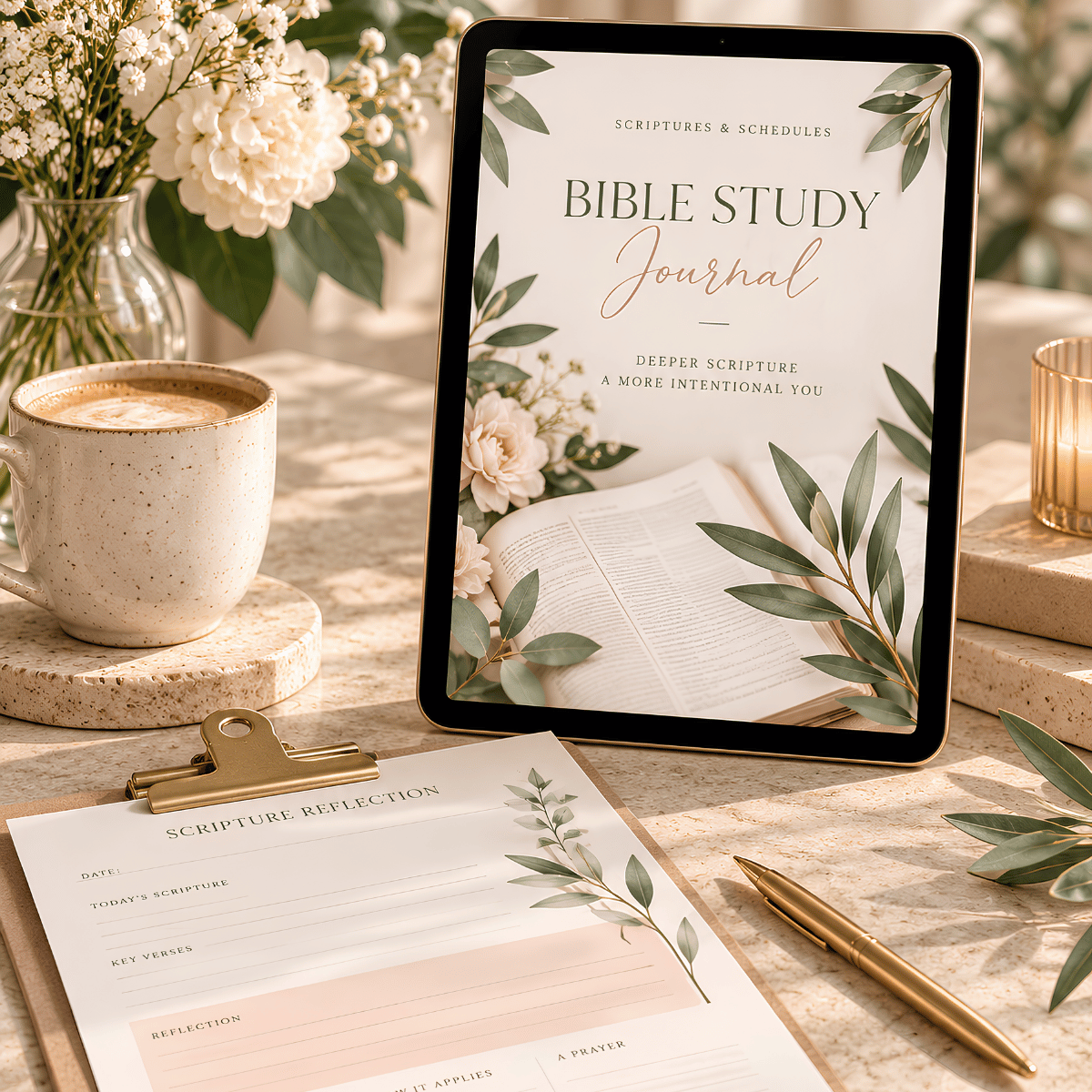
Primary Scripture 2 Timothy 2:15
Also in this study 2 Timothy 3:16–17; Acts 17:10–12; Nehemiah 8:8; James 1:22; Psalm 119:18
Studying the Bible is more than reading an encouraging verse and moving on with your day.
It’s an opportunity to understand God’s Word, learn about His character, and grow in faithful obedience.
But where should you begin?
Different Bible study methods can help you approach Scripture with greater understanding and purpose.
Why Should Christians Study Scripture Carefully?
2 Timothy 2:15 encourages Timothy to handle the word of truth correctly.
In context, Paul is instructing Timothy about faithful teaching and avoiding harmful disputes.
Although the instruction specifically addresses Timothy’s ministry responsibilities, the principle of treating Scripture carefully is valuable for all believers.
Acts 17:10–12 also describes the Bereans examining the Scriptures to assess the message they were hearing.
Their example reminds us of the importance of thoughtful engagement with God’s Word.
Here are four study approaches that can help.
1. SOAP Bible Study Method
SOAP stands for Scripture, Observation, Application, and Prayer.
Scripture: Choose and read a passage.
Observation: Examine what the passage says.
Application: Reflect on how its teaching should influence your life.
Prayer: Respond to God based on what you’ve learned.
Biblical Example: James 1:19–22
Read the entire passage.
Observe how James addresses listening, speech, anger, and obedience.
Consider the connection between receiving God’s Word and putting it into practice.
Application question: How can I become more thoughtful in my conversations and responses?
Best for: Daily Bible study and guided journaling.
2. Verse Mapping
Verse mapping involves taking a closer look at a verse while considering its context, key words, and connections to the surrounding passage.
Biblical Example: Proverbs 3:5–6
Begin by reading the surrounding section, Proverbs 3:1–12.
Notice the repeated encouragement to trust God and embrace His wisdom.
Then examine important words and phrases using reliable Bible study resources.
Ask:
- What is the author teaching about trust?
- How does this passage fit within the wisdom literature of Proverbs?
- What does it mean to acknowledge God in one’s decisions?
Avoid treating the passage as an unconditional guarantee that every decision will lead to an easy or successful outcome.
Best for: Detailed reflection on individual passages.
3. Inductive Bible Study
Inductive study uses three steps:
Observation — What does the passage say?
Interpretation — What does it mean in context?
Application — How should I respond?
Biblical Example: Philippians 4:4–9
Observation: Identify the instructions about rejoicing, prayer, peace, and thought.
Interpretation: Consider Paul’s message to the Philippian church and the wider themes of his letter.
Application: Reflect on how prayer and godly thought patterns can influence your response to difficulties.
Nehemiah 8:8 provides an example of Scripture being read and its meaning explained so people could understand it.
Understanding should come before personal application.
Best for: Detailed study of chapters and longer passages.
4. Topical Bible Study
A topical study examines what different biblical passages teach about one subject.
Choose a theme such as prayer, forgiveness, wisdom, or stewardship.
Biblical Example: Prayer
Study the following passages:
- Matthew 6:5–13 — Jesus’ teaching about prayer
- Philippians 4:6–7 — Prayer and thanksgiving
- 1 Thessalonians 5:16–18 — Prayer as part of Christian life
- James 5:13–18 — Prayer within the community of believers
Read each passage within its original context.
Then compare the themes.
Ask what Scripture teaches about the purpose, practice, and attitudes of prayer.
Best for: Exploring biblical themes across different books.
How Do You Choose the Right Method?
| Method | Focus |
|---|---|
| SOAP | Read, reflect, apply, and pray |
| Verse Mapping | Examine a verse in context |
| Inductive | Observe, interpret, and apply |
| Topical | Explore a biblical theme |
No single method is required for every passage.
The purpose of each approach is to help you understand Scripture faithfully.
Three Principles for Studying the Bible
Read in context. Consider the surrounding passage and the author’s intention.
Seek understanding. Use reliable resources when needed, rather than making assumptions.
Respond in obedience. James 1:22 emphasizes putting God’s Word into practice.
Reflection Questions
- Which Bible study method would help me grow right now?
- Do I normally consider the context of a verse before applying it?
- What have I learned about handling Scripture carefully?
- How can I make my Bible study more consistent?
Closing Prayer
Heavenly Father,
Thank You for the gift of Scripture.
Open my understanding as I study Your Word. Help me approach the Bible with humility, patience, and a desire for truth.
Teach me not only to gain knowledge but to live according to what I learn.
In Jesus’ name, Amen.
Explore Bible Study Resources
Discover the Bible Studies collection at Scriptures & Schedules for tools that support Scripture reading, study, and reflection.

